Elbow Surgery in Spain
Elbow pain gets in the way of the small things — typing, carrying shopping, training, playing sport. Sometimes it’s overuse. Sometimes it’s a compressed nerve, arthritis, or an old injury that never really healed properly.
At INCOT in Valencia, our upper limb surgery team treats degenerative, traumatic and sports-related elbow conditions, and we build every treatment plan around the patient in front of us.
There’s no single way to operate on an elbow. The right technique, arthroscopic or open, comes down to the condition itself, how advanced it is and which structures are involved. What stays constant is the goal: less pain, and as much of your normal function back as possible.
Elbow Conditions and Surgeries We Treat
Every elbow condition calls for its own approach. Before recommending surgery, the specialist looks at your symptoms, your diagnosis, your lifestyle and how the condition is affecting your daily life.
Here are some of the main elbow conditions we treat at INCOT.
Tennis Elbow Surgery
Golfer’s Elbow Surgery
Cubital Tunnel and Ulnar Nerve Surgery
Tennis elbow, or lateral epicondylitis, causes pain on the outside of the elbow and is usually linked to repeated use of the forearm muscles and tendons.
Most cases settle without surgery. However, tennis elbow surgery may be considered in selected patients when symptoms persist and continue to interfere with work, sport or everyday life despite appropriate non-surgical treatment.
The surgical technique is chosen according to each individual case.
Golfer’s elbow, or medial epicondylitis, brings pain and tenderness on the inside of the elbow. Despite the name, it’s not just a golfer’s problem — it can affect anyone whose work, training or daily routine repeatedly stresses the tendons around the elbow.
When symptoms persist and do not respond adequately to conservative treatment, golfer’s elbow surgery may be considered to address the affected area, relieve symptoms and improve elbow function.
The ulnar nerve runs around the inner side of the elbow, and it’s a common spot for compression or irritation — a condition known as ulnar nerve entrapment or cubital tunnel syndrome.
Patients often notice numbness or tingling, particularly in the ring and little fingers, along with some discomfort or weakness in the hand.
When surgery is needed, cubital tunnel surgery or ulnar nerve surgery relieves the pressure on the nerve. The exact approach depends on the location, severity and characteristics of the nerve compression, which is why a specialist assessment comes first.
Elbow Fracture Surgery
Elbow Arthroscopy
Elbow Arthritis and Post-Traumatic Stiffness Surgery
Elbow fractures range from fairly straightforward breaks to complex trauma involving several of the bones and structures that make up the joint.
In some cases, elbow fracture surgery is needed to restore alignment and stability, giving the joint the best possible conditions for a functional recovery.
At INCOT, we also see patients still dealing with reduced movement or post-traumatic elbow stiffness months or years after a fracture or injury.
Elbow arthroscopy is a minimally invasive technique that lets the surgeon examine and treat the inside of the elbow joint through small incisions, using a camera and specialised instruments.
Depending on the condition, elbow arthroscopic surgery may be used to treat problems such as:
- Loose bodies within the elbow joint
- Synovitis
- Bony impingement and bone spurs
- Certain causes of pain and restricted joint movement
The specialist will decide whether arthroscopy is the right fit after assessing the joint and your symptoms.
Arthritis can bring progressive elbow pain, stiffness and loss of movement, and significant past trauma can leave similar long-term restrictions behind.
When these problems are having a real impact on everyday life and other treatments haven’t helped enough, elbow arthritis surgery or surgery for post-traumatic elbow stiffness may be considered.
The right procedure depends on the condition of the joint, how much stiffness is involved, and what you as an individual patient need.
Why Choose Our Team for Elbow Surgery in Spain?
Travelling abroad for surgery is about more than choosing a surgeon — international patients also need clear communication and coordinated support before, during and after treatment.
At INCOT, patients travelling to Valencia can count on:
A specialist in upper limb and elbow surgery
An English-speaking medical and rehabilitation team
Private healthcare without public system waiting lists
Modern private hospital facilities in Valencia
Arthroscopic and open surgical techniques depending on the condition
Support designed specifically for international patients
Coordinated treatment, rehabilitation and follow-up
• Assistance with transport between the airport, hospital and accommodation
Our aim is simple: make organising elbow surgery in Spain as easy as possible for patients travelling from the UK and elsewhere in Europe.
Our Elbow Surgery Specialist in Valencia
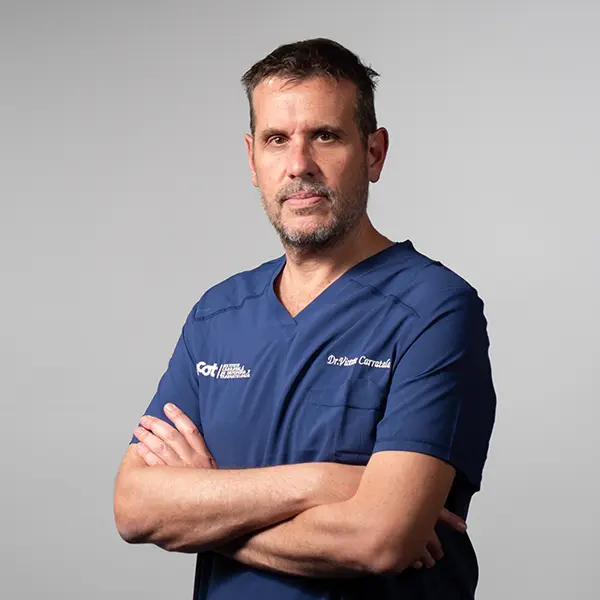
Vicente Carratalá
Dr. Vicente Carratalá Baixauli leads elbow surgery at INCOT and specialises in arthroscopic and reconstructive surgery of the upper limb. He is Chief of the Hand and Upper Limb Surgery Unit at Quirónsalud Valencia, with extensive experience treating traumatic, degenerative and sports-related upper limb conditions. His focus goes beyond simply treating the affected structure — it's about preserving or recovering function, so patients can get back to everyday life with a treatment plan built around their own circumstances. International patients can have their case assessed before travelling to Valencia, so the medical team can review the condition and prepare an individual treatment plan in advance.
Arthroscopic vs Open Elbow Surgery
Elbow surgery can be performed using either an arthroscopic or open technique, and neither one suits every condition.
During elbow arthroscopy, a small camera goes into the joint through tiny incisions, letting the surgeon see inside the elbow and, when appropriate, treat problems like loose bodies, synovitis or bony impingement.
Open elbow surgery provides direct access to the structures around the joint and may be required for certain fractures, reconstructive procedures or other conditions where an arthroscopic approach is not appropriate. The choice between techniques depends on the diagnosis, anatomy and objectives of the procedure.
Dr. Carratalá will recommend the technique that best fits your diagnosis and the goals of your treatment.
Recovery After Elbow Surgery
Elbow surgery recovery looks different depending on the procedure.
Recovery from a relatively limited arthroscopic procedure won’t follow the same timeline as recovery from fracture surgery, nerve surgery or treatment for significant post-traumatic stiffness.
That’s why rehabilitation is always individualised. Physiotherapy and guided exercises often play a key role, helping patients progressively regain movement and function.
Your medical team will walk you through what to expect from your specific procedure — including any restrictions during the early recovery period, and when you might return to work, driving, exercise or sport.
For international patients, the recovery plan is also coordinated around your stay in Valencia and your journey home afterwards.
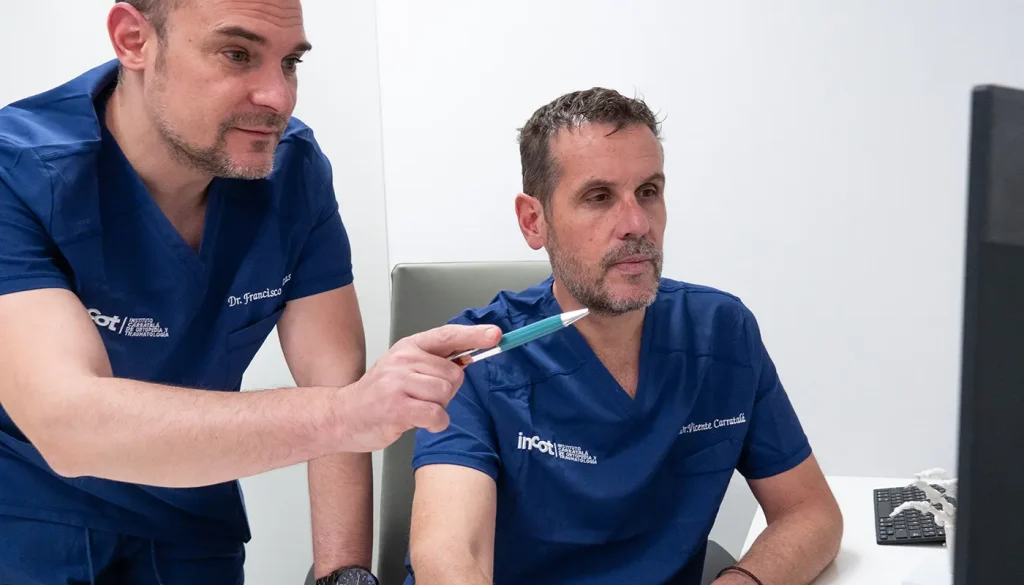
Request the Cost of Elbow Surgery in Spain
For other elbow procedures, our team will put together a personalised quote once we’ve reviewed your case.
Elbow Surgery FAQs
How long does elbow surgery take?
It depends on the procedure and how complex your case is. An elbow arthroscopy, a nerve procedure and surgery for a complex fracture can look quite different in terms of surgical time. Once your case has been assessed, the specialist can explain what to expect from your specific operation.
How long is recovery after elbow surgery?
There’s no single elbow surgery recovery time — it depends on the condition, the surgical technique and you as an individual. Some procedures allow a quicker return to everyday activities, while others call for a longer rehabilitation programme. Your surgeon and physiotherapy team will set out a recovery plan tailored to you.
When does tennis elbow require surgery?
Most patients with tennis elbow never need an operation. Tennis elbow surgery tends to come into the picture when symptoms persist, meaningfully affect everyday life, and haven’t improved enough with proper non-surgical treatment. That decision should always come from an individual specialist assessment.
What is cubital tunnel surgery?
Cubital tunnel surgery relieves pressure on the ulnar nerve as it passes around the elbow — the nerve behind that numbness, tingling, discomfort or weakness in the hand and fingers. Different surgical approaches may be used depending on your individual condition.
Can elbow surgery be performed arthroscopically?
Yes — some elbow conditions can be treated with elbow arthroscopy. At INCOT, we use it for problems such as loose bodies, synovitis and bony impingement. Other conditions respond better to open surgery, so the right technique always comes down to the diagnosis
How long should I stay in Spain after elbow surgery?
The recommended stay in Valencia depends on the type of elbow surgery and the follow-up needed before you travel home. Your medical team will advise on the right travel schedule as part of your treatment plan, so your return home lines up with the early stages of your recovery.