What is total knee arthroplasty?
Total knee arthroplasty is one of the most common surgical procedures performed across the entire field of medicine; in Australia and New Zealand, more than 50,000 are carried out every year.
Total knee arthroplasty removes and replaces the damaged surface of the knee with an implant. Total knee implants are made up of three parts: a metal femoral component (thigh bone), a metal tibial component (shin bone), and a plastic spacer placed between the two previous components. Sometimes, a fourth plastic component is used to cover the back of the patella (kneecap).
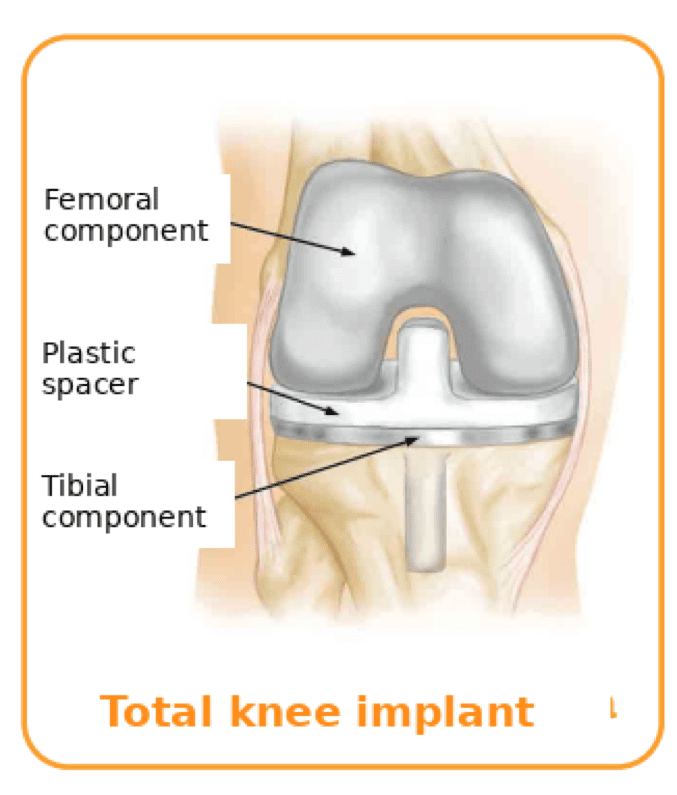
More than 90% of people who undergo total knee arthroplasty experience considerable relief from knee pain and are able to carry out their everyday activities more easily.
Total knee arthroplasty with robotic technology
At our clinic, we perform this procedure with the help of robotic technology to improve the quality, precision and recovery of our patients. Robotic-assisted technology allows your surgeon to plan and carry out your procedure with greater precision, tailored to the unique anatomy of your knee, to help you regain your quality of life.
First, your surgeon will determine the size and position of the total knee implant using computer and robotic technology.
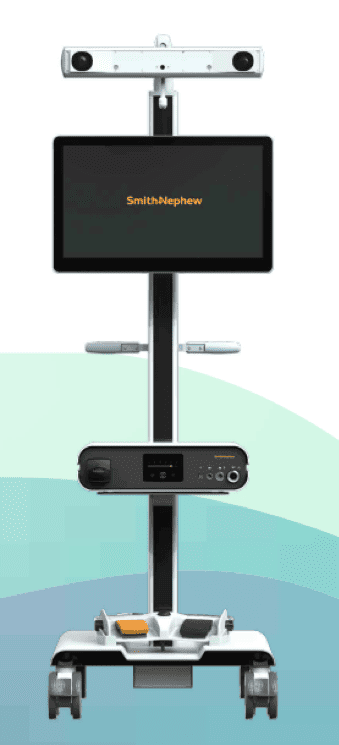
Then, computer technology is used to determine the unique shape and movement of your knee in order to plan the procedure virtually. Robotic technology is used to carry out the procedure precisely.
The additional layer of planning and precision provided by the system is designed to ensure that the procedure is performed exactly as planned by the surgeon.
The robotic system does not perform the procedure itself; rather, it assists the surgeon by providing accuracy and precision, which are essential to the success of the surgical procedure.
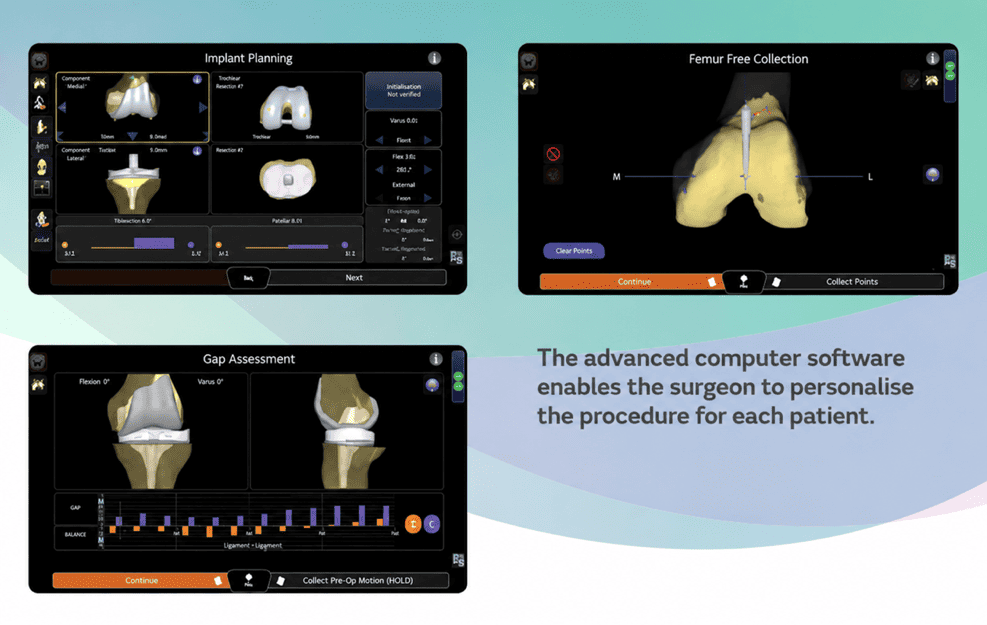
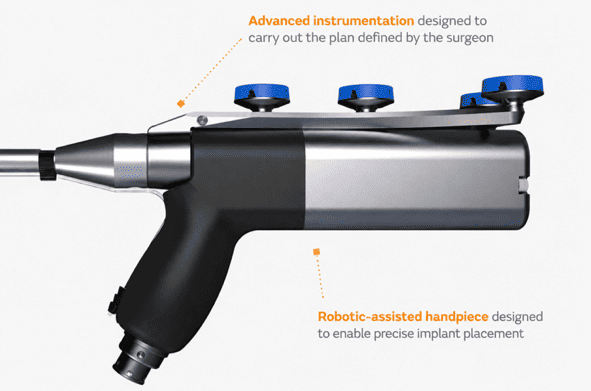
Once you are familiar with the technology used for robotic total knee arthroplasty, we will explain the benefits of using robotic technology.
Benefits of robotic technology for total knee replacements
Some of the benefits of using this technique are:
- Personalised planning: Based on the unique anatomy and movement of your knee.
- Greater precision: Advanced instrumentation and robotic assistance for more precise placement.
- Reliable planning: Your surgeon plans the procedure and the system helps carry it out accurately.
- Better outcomes for your quality of life: Pain relief and recovery of knee function.
For all these reasons, at Incot we perform knee replacements using robotic technology to assist our surgeons.
What to expect during knee replacement surgery
What total knee replacement surgery will involve
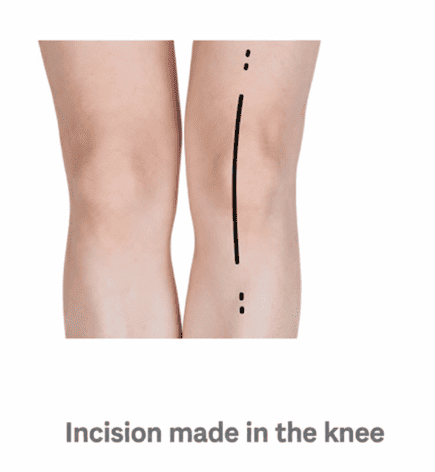
First, you will be given anaesthesia to relax your body for the surgery and to block pain. Before the procedure, your surgeon and anaesthetist will consider and determine the correct type of anaesthetic for you. Your surgeon will then make an incision extending from several centimetres above the kneecap to several centimetres below the kneecap.
Using the robotic system, special trackers are attached to both the thigh bone (femur) and the shin bone (tibia) with four small surgical pins, which are inserted through small incisions made in the skin. These trackers are essential for the precision of the system, as they provide the surgeon with a constant reference point throughout the procedure.
Using computer technology, your surgeon determines the unique shape and movement of your knee. This allows a three-dimensional model of your knee to be generated, which the surgeon will use to plan the procedure. At this stage, the appropriate size and position of the implant will be determined.
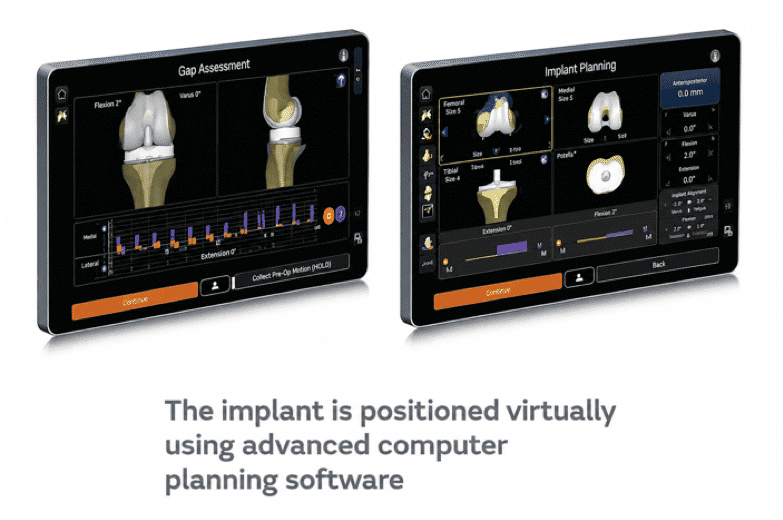
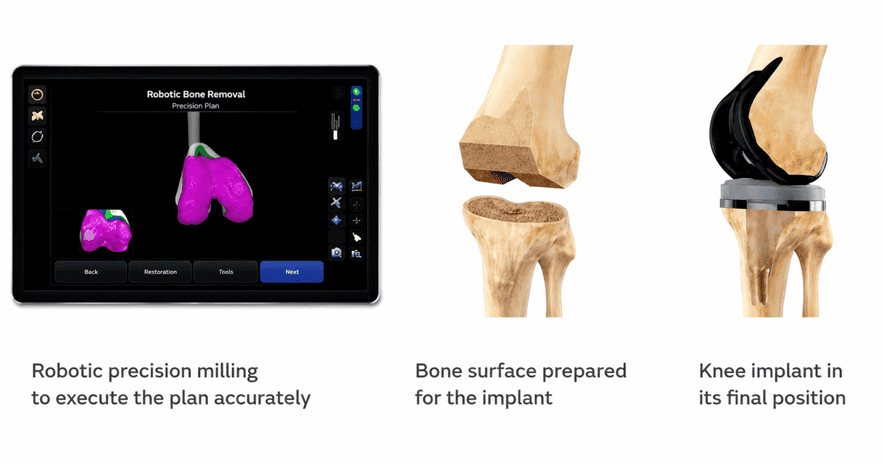
Once your surgeon has determined virtually the correct size and position of the implant, a hand-held robotic tool is used to position the cutting guides precisely for bone removal. These cutting guides allow the surgeon to use a surgical saw to remove the damaged bone from the knee and create space for the implant.
The additional layer of precision provided by the robotic system is intended to enable accurate placement of the cutting guide. The system does not perform the procedure itself; rather, it assists the surgeon by providing accuracy and precision, which are essential to the success of the surgical procedure.
Once the implant is in its final position, the area is thoroughly cleaned and the incision is closed, thereby completing the procedure.
Postoperative period
Immediately after the surgical procedure, you will be monitored while you wake up from the anaesthetic. Once you are awake, you will be taken to your hospital room. Please bear in mind that you will remain in hospital for several days.
In addition to the incision made in your knee, there will be two small incisions in both your thigh and the lower part of your leg, where the trackers were placed. You should expect to feel some pain. This is a natural part of the healing process. Your doctor and the nursing staff will care for you and help relieve your pain.
Most patients will start exercising the knee the day after surgery, although postoperative care will vary from one patient to another. A physiotherapist will prescribe exercises to help restore strength and function in the knee, and to increase its range of motion. At this stage, swelling, stiffness and tightness are common.
Rehabilitation after surgery
The success of your surgical procedure will depend largely on how well you follow your surgeon’s instructions during the first few weeks after the operation. The speed of your recovery depends on factors such as pain, flexibility, strength and balance in the knee.
Follow-up appointments are likely to be scheduled to check your condition and progress during recovery. To achieve the goals of knee arthroplasty, you must fully commit to the rehabilitation process and work diligently both on your own and with your physiotherapist.
At times, the rehabilitation process can be quite painful. However, if you follow your programme properly and overcome the challenges of rehabilitation, you will achieve the goals you set when deciding to undergo surgery.
Complications of total knee arthroplasty surgery
As with any surgical procedure, total knee arthroplasty involves risks. Each patient is unique. You should speak to your doctor about the specific complications you may encounter. Complications may include, but are not limited to:
- Blood clots. Your surgeon may prescribe medication to help prevent blood clots.
- Infection. To help prevent infections, you may be given antibiotics before and after surgery.
- Nerve or blood vessel injuries. Although very uncommon, damage to nerves and blood vessels may occur during the procedure.
- Other risks. Your individual risks should be discussed with your doctor.
Total knee arthroplasty is an effective solution for people who suffer from persistent pain, loss of mobility and limitations in their daily life due to advanced joint wear. When conservative treatments no longer provide the expected relief, a knee replacement can help restore function, reduce pain and significantly improve quality of life.
At INCOT, in Valencia, we have a medical team specialised in knee surgery and advanced robotic technology to plan each procedure in a personalised and precise way. This approach allows the procedure to be adapted to each patient’s anatomy, supporting more accurate surgery and a recovery focused on returning to everyday activities as soon as possible.
If you suffer from knee pain, advanced osteoarthritis or difficulty walking, climbing stairs or carrying out your usual activities, we recommend requesting a personalised medical assessment. At INCOT, we will study your case individually to determine whether total knee arthroplasty is the most suitable option for you and support you throughout the entire process, from diagnosis to recovery.