What is osteoarthritis of the knee?
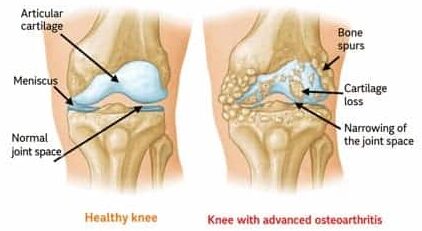
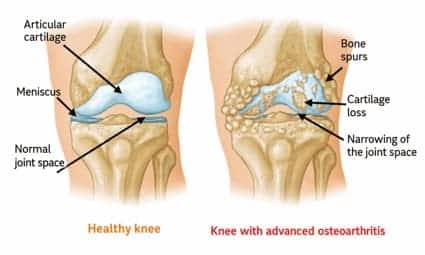
The knee is a hinge-like joint made up of the femur (the thigh bone), the tibia (the shin bone) and the patella (the kneecap), which are held together by muscles, ligaments and other important soft tissues. In the middle of the knee there is natural cushioning, known as the “meniscus”, which is made of cartilage.
This material acts as a shock absorber during weight-bearing activities, such as walking or climbing stairs. Wear and tear can cause the cartilage in the knee to deteriorate and lead to a condition known as “osteoarthritis”. Age, obesity, hereditary factors, sex and other factors can cause osteoarthritis to worsen. Common symptoms include pain, swelling and stiffness.
Treatment for Knee Osteoarthritis
Although there is no cure for osteoarthritis, there are several treatment options available to manage pain and potentially slow the progression of the disease.
Non-surgical Treatment Options
Some of the non-surgical options for treating osteoarthritis are as follows:
Lifestyle changes: losing weight and avoiding aggravating activities to reduce the strain placed on the knee.
- Exercises: low-impact exercises prescribed by the surgeon and designed to improve strength and flexibility.
- Anti-inflammatory medication: to reduce swelling in the joint and provide temporary pain relief.
- Cortisone or steroid injection: a powerful anti-inflammatory injected directly into the joint.
- Joint fluid treatment: a series of injections applied directly into the knee to improve knee lubrication.
- Glucosamine or chondroitin: dietary supplements to support joint health.
- Knee brace: used to provide external stability to the knee.
Surgical Treatment Options
On other occasions, the only remaining option is surgical treatment, which may involve one of these three procedures.
- Arthroscopic surgery: a minimally invasive procedure that removes debris or repairs torn cartilage. Arthroscopic surgery often becomes less effective as osteoarthritis worsens.
- Partial knee replacement: a procedure that replaces the damaged compartment of the knee and is usually reserved for early-stage or mid-stage osteoarthritis.
- Total knee replacement: a procedure that replaces all three compartments of the knee when osteoarthritis has reached an advanced stage.
Reasons for Surgery for Knee Osteoarthritis
Knee replacement should be considered when all conservative, non-surgical measures fail to provide relief. Surgery may be performed for the following reasons:
- To relieve pain
- To improve joint stability
- To improve alignment and correct bone deformity
- To increase quality of life
- To optimise activities of daily living
As we have seen, knee osteoarthritis is a degenerative condition that can significantly affect the mobility and quality of life of those who suffer from it. However, thanks to medical and technological advances, there are now different treatments capable of relieving pain, improving joint function and helping patients return to a more active life.
If you would like more information about these treatments, at Clínica INCOT in Valencia, Spain, we can provide personalised advice to determine the most appropriate treatment for your case. Our team of specialists has extensive experience, leading medical professionals and state-of-the-art technology to provide everything from conservative treatments to the most advanced surgical procedures, always with the aim of offering the best possible care and recovery.